Grooming & Restraint Training: Setting Your Puppy Up for Lifetime Success
With summer litters heading home across the country, new owners are diving headfirst into crate training, housebreaking, and basic obedience. But there is one foundational skill that often gets put on the back burner until a puppy is squirming on a vet scale or grooming table: building comfort with physical handling and restraint.
Grooming isn’t just about keeping coats neat or show-ready; it’s essential health care. Starting cooperative care early turns what could be a lifelong, stressful struggle into a calm, predictable bonding routine for both you and your dog.
1. Teach Comfort with Gentle Restraint
Puppies aren’t naturally wired to hold still when they feel constrained—it’s a learned behavior. Teaching your puppy that gentle physical restraint is safe, predictable, and rewarding prevents panic during future vet checkups and grooming sessions.
The Hug Restraint: Wrap your arms securely around your puppy’s torso while they are seated or lying down. Feed high-value treats continuously for 5–10 seconds, and release before they start to struggle.
Chin & Beard Holds: Practice gently cupping your puppy’s jaw or holding their beard lightly for a few seconds at a time. This builds steady, calm focus for scissor work around the eyes and muzzle.
Grooming Loops & Restraint Aids: Introduce the sensation of a loose grooming arm loop or belly slip indoors. Pair the feeling of overhead loops with rewards so the equipment feels neutral from day one.

2. Low-Stakes Handling (Before You Pick Up a Brush)
Before introducing actual grooming tools, focus on body-awareness confidence. Young puppies need to know that having sensitive extremities touched is standard routine.
Paw & Nail Acclimation: Gently touch each toe pad, separate the toes, and tap the nails with a dull object while rewarding calm behavior.
Ears & Rear Handling: Lift ears to inspect the canal, run your hands down rear legs, and gently handle the tail to prepare them for sanitary trims and physical exams.
Tip: Keep early training sessions under 2 to 3 minutes. Always end on a high note while your puppy is still calm and engaged, rather than waiting for them to grow restless.
3. Introduce Sounds & Vibrations Early
Unfamiliar noises—dremels, high-velocity dryers, and clipper motors—are often what startle young dogs most during their first grooming experiences.
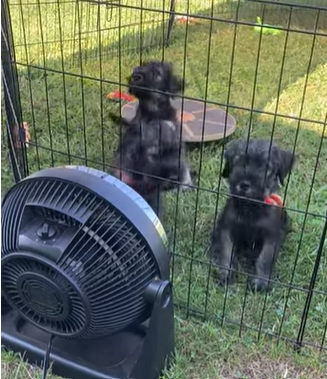
- Ambient Exposure: Turn on clippers or a nail dremel across the room while your puppy eats dinner or plays with a favorite toy. Turn on a fan near your puppy’s area to expose them to blowing air.
- Gradual Contact: Over multiple short sessions, bring the running tool closer.
- Vibration Desensitization: Touch the back body of the vibrating tool (never the active blade) gently against your puppy’s shoulder or flank while rewarding with a lick mat or treat. You can also use an electric toothbrush for this.
4. Establish a Designated Workspace
Puppies benefit enormously from clear environmental boundaries. Establishing a specific location for grooming helps them switch from play mode to focus mode.
Place a non-slip rubber mat on a raised, stable table or workspace.
Maintain a clear rule: The ground is for play; the table is for quiet focus.
Never allow a puppy to jump off the grooming surface—always lift them off when the session ends so they never learn that leaping is an escape option.
Ready to Master Puppy Grooming?
Whether you want to learn proper coat management, or structural maintenance as your puppy grows, master groomer and educator Leslie Shriner brings you step-by-step guidance.
Free Video Tutorials
New to puppy handling and want to see these techniques in action? Check out Leslie’s free YouTube tutorials for bite-sized walk-throughs addressing puppy grooming topics you need to get started: Watch Free Puppy Grooming Tutorials on YouTube
Comprehensive Online Grooming Masterclasses
Looking for in-depth, professional instruction on coat management, scissor/ clipper technique, and keeping your dog’s coat in prime condition? Explore Leslie’s structured online courses designed for both pet owners and exhibitors: Explore Leslie’s Online Structured Courses